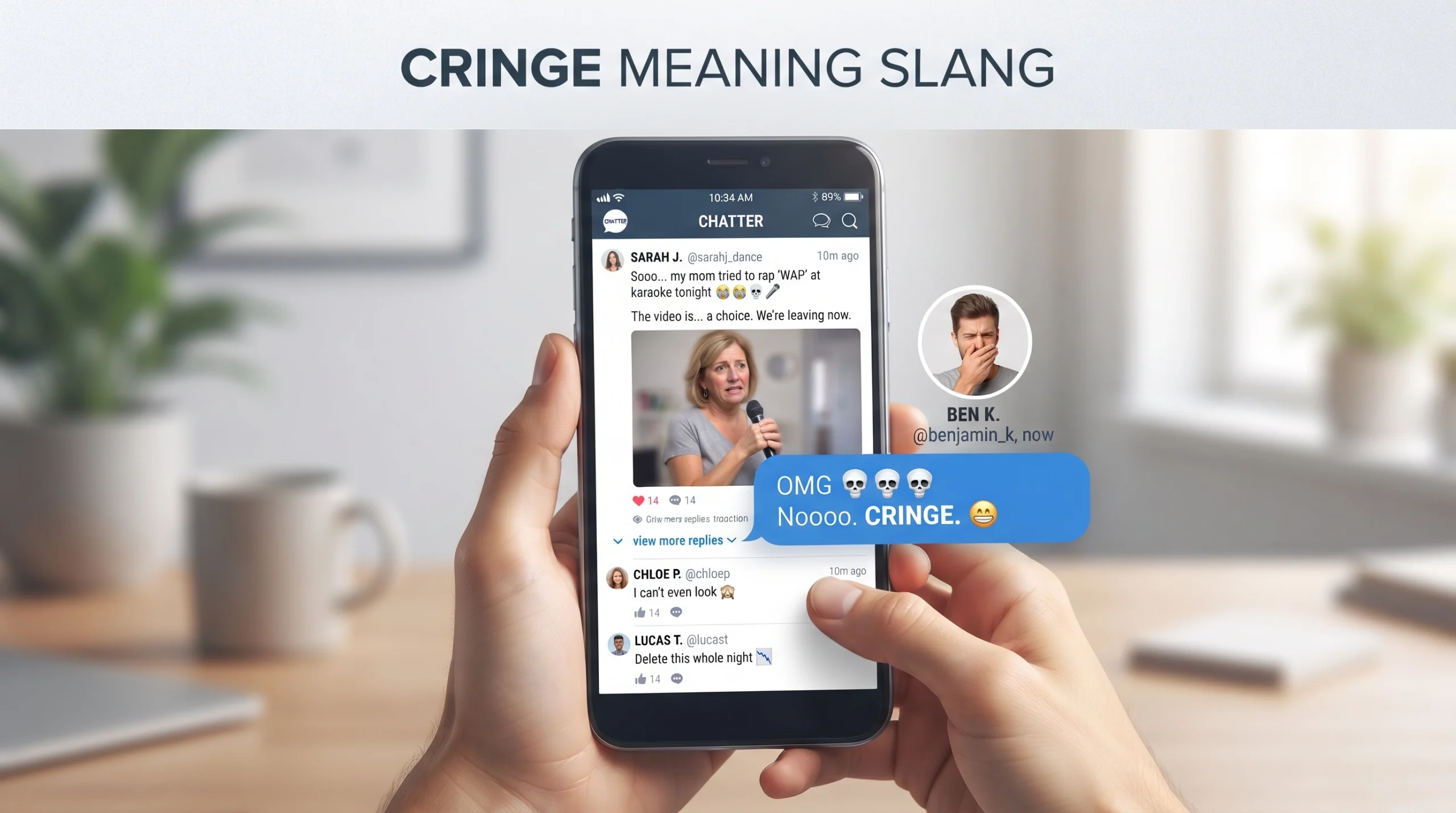
Cringe Meaning Slang: What Does “Cringe” Mean?
Cringe is slang for something that feels awkward, embarrassing, uncomfortable, or difficult to watch, especially when it creates a feeling of secondhand embarrassment. In online conversations, someone might say “That’s cringe” when they think a video, joke, post, message, or behavior feels awkward or overly forced. Cambridge Dictionary also lists the informal adjective cringe as meaning very embarrassing because something is bad or silly.
The word is common in casual texting and online communication. Its meaning is usually negative, but the tone can be playful, sarcastic, or humorous depending on who is using it and what they are reacting to.

What Does “Cringe” Mean in Slang?
In slang, cringe describes something that causes embarrassment, awkwardness, or discomfort. It is especially associated with secondhand embarrassment, which happens when you feel uncomfortable watching someone else behave awkwardly.
For example:
“That video was so cringe.”
The speaker is saying that the video made them feel embarrassed or uncomfortable because of what happened in it.
Another example is:
“That joke was cringe.”
Here, the person probably thought the joke was awkward, forced, or unsuccessful.
The slang use developed from the traditional meaning of cringe, which refers to reacting physically or emotionally to something uncomfortable. Dictionary sources also recognize cringe as a noun and adjective in addition to its traditional verb use.
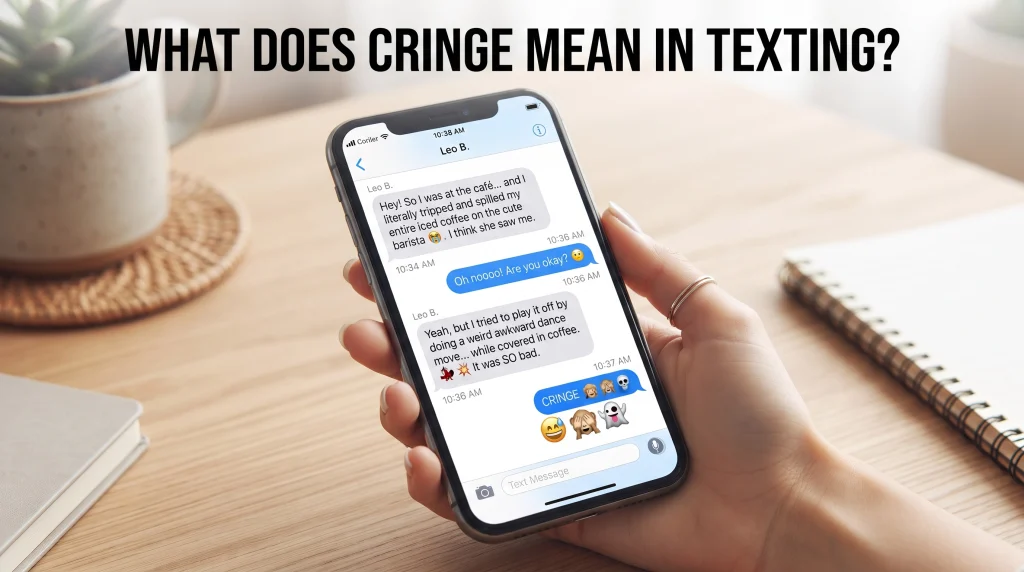
What Does Cringe Mean in Texting?
In texting, “cringe” usually means that a message, joke, photo, story, or behavior feels embarrassing or awkward.
Someone might simply reply:
“Cringe 😬”
This is a short way of saying that they found something uncomfortable, awkward, or embarrassing.
The meaning can depend heavily on the relationship between the people texting. Friends may use “cringe” jokingly when teasing each other, while someone in a more serious conversation may use it as genuine criticism.
Examples of cringe in texts
Example 1:
“I sent my old crush a three-paragraph message.”
“Bro, that’s cringe 😭”
The response suggests that the message may have seemed overly dramatic or embarrassing.
Example 2:
“I just watched my old middle-school videos.”
“Same. So cringe.”
Here, the speakers are probably joking about their own past behavior.
Example 3:
“He kept trying to impress everyone at the party.”
“That sounds pretty cringe.”
In this context, the word describes behavior that seemed forced or socially awkward.
How “Cringe” Is Used on Social Media
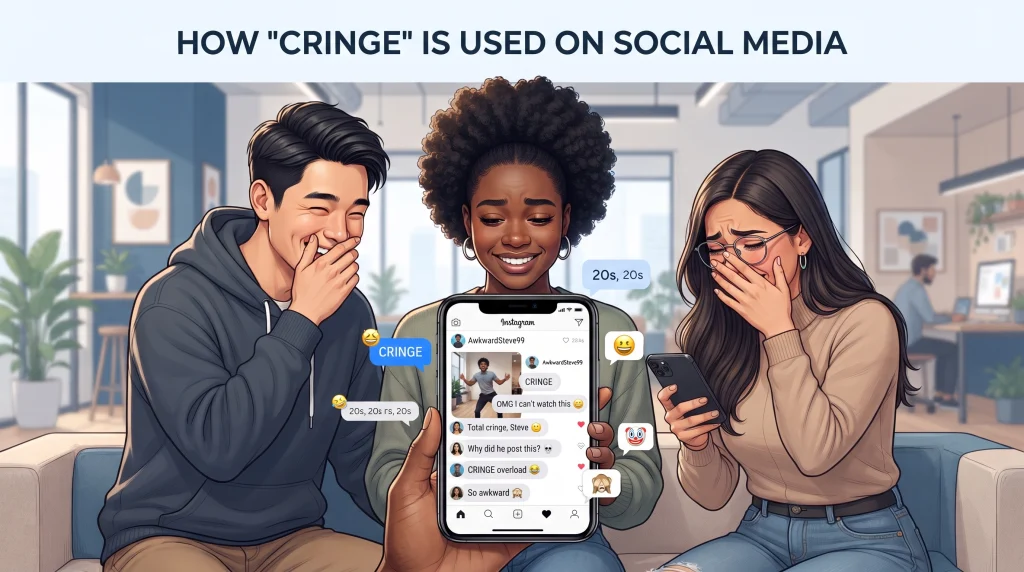
On social media, cringe is often used as a quick reaction to posts, videos, comments, captions, or other content that viewers consider awkward or embarrassing. Social-media glossaries describe the term as a reaction to content perceived as socially awkward, uncomfortable, inappropriate, or overly forced.
You may see phrases such as:
- “This is cringe.”
- “So cringe.”
- “That was cringe.”
- “Why is this so cringe?”
- “I can’t watch this. The cringe is too much.”
- “This caption is cringe.”
The term can also be used humorously. Someone may call their own old photo “cringe” because they now feel embarrassed by it.
What counts as cringe is subjective. One person might find a particular video funny or harmless, while another person may consider it awkward. Social-media use of the term often depends on personal taste, humor, social expectations, and context.
Why Do People Call Something Cringe?
People generally call something cringe when it creates a strong sense of social awkwardness or secondhand embarrassment.
Common situations include:
Trying too hard
A person may be called cringe when they appear to be trying excessively hard to look funny, cool, popular, or impressive.
Awkward jokes
A joke that receives no reaction or feels poorly timed may be described as cringe.
Overly dramatic messages
Extremely dramatic or exaggerated texts can sometimes receive a “cringe” reaction, particularly when the recipient feels the message is unnecessarily intense.
Embarrassing moments
People may use cringe to describe awkward mistakes, uncomfortable conversations, or embarrassing social situations.
Forced online content
Posts that seem unnatural, overly scripted, or insincere can sometimes be labeled cringe. Social-media references commonly associate cringe with behavior or content that feels forced or inauthentic.
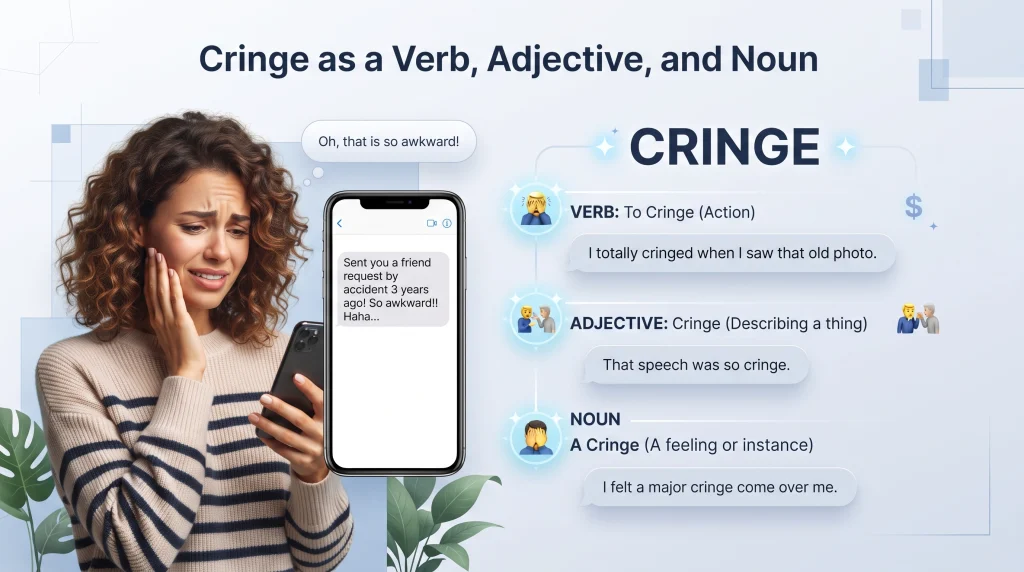
Cringe as a Verb, Adjective, and Noun
One reason the word appears in different forms is that cringe can function as a verb, noun, adjective, and part of related expressions.
| Form | Example | Meaning |
|---|---|---|
| Verb | “I cringe whenever I see that video.” | I feel embarrassed or uncomfortable. |
| Adjective | “That video is cringe.” | The video is embarrassing or awkward. |
| Noun | “That was pure cringe.” | The situation was extremely awkward. |
| Cringey | “That was really cringey.” | It felt embarrassing or awkward. |
| Cringeworthy | “That moment was cringeworthy.” | It was especially embarrassing. |
Cambridge Dictionary recognizes cringe as an informal adjective meaning very embarrassing because something is bad or silly, as well as its traditional verb meaning.
Examples of “Cringe” in Conversation
Understanding real conversational examples makes the slang easier to recognize.
Example 1: Awkward video
“Did you see that video?”
“Yeah, it was so cringe.”
Meaning: The video made the speaker feel awkward or embarrassed.
Example 2: Old memories
“I found my old social media posts.”
“I would be too scared to look. 😂”
“I did. They’re so cringe.”
Here, the person is embarrassed by their past posts.
Example 3: Failed joke
“He told the same joke three times.”
“That was painful to watch.”
“Seriously, so cringe.”
The word expresses discomfort with the awkward situation.
Example 4: Self-deprecating use
“Why did I post that photo five years ago?”
“I can’t believe it. So cringe.”
The speaker is using the word about their own past behavior rather than criticizing someone else.
Cringe vs. Cringey vs. Cringeworthy
These terms are closely related, but they are used somewhat differently.
Cringe is often used as a short slang reaction:
“That is cringe.”
Cringey describes something that has qualities that make people feel awkward or embarrassed:
“That was a really cringey conversation.”
Cringeworthy means particularly embarrassing or awkward:
“The speech had a few cringeworthy moments.”
Cambridge’s language guidance also identifies cringeworthy as an informal adjective for something that makes you feel very embarrassed, often because of another person’s behavior.
In casual internet language, however, people may use these forms interchangeably.
Is “Cringe” an Insult?
It can be, depending on context.
Calling someone’s behavior “cringe” can be a form of criticism because it suggests that the person’s actions or content are embarrassing, awkward, or socially uncomfortable.
However, friends may also use the word playfully. Someone might call a friend’s old photo “cringe” without intending serious criticism.
The surrounding conversation is therefore important. A laughing emoji, joking tone, or friendly relationship can make the expression lighter, while a direct comment from someone unfamiliar may sound more critical.
How to Respond When Someone Says “Cringe”
Your response depends on what the person means.
If they are joking, you could respond casually:
“😂 I know, right?”
If they are criticizing something you posted, you can simply ask:
“What makes it cringe?”
If they are reacting to an embarrassing moment, you might say:
“I know, I couldn’t watch it either.”
If you disagree with their opinion, you can keep the response simple:
“I actually thought it was funny.”
There is no single correct response because “cringe” can express humor, criticism, embarrassment, or disagreement.
Is Cringe Always Negative?
Usually, cringe has a negative or uncomfortable meaning, but it is not always intended as a serious insult.
Online, people frequently use the word in humorous or exaggerated ways. Someone might call their own behavior cringe because they are laughing at themselves, or friends might call each other’s actions cringe as part of friendly teasing.
The important point is that cringe is subjective. Something that one person considers awkward may seem completely normal or funny to another person. Social-media references specifically note that perceptions of what is cringeworthy vary between individuals.
Conclusion
The cringe meaning slang refers to something that feels awkward, embarrassing, uncomfortable, or likely to cause secondhand embarrassment. In texting and social media, people often use “cringe” as a quick reaction to a message, video, joke, post, or behavior they find awkward.
The word can function as a verb, adjective, or noun, while forms such as cringey and cringeworthy describe things that produce a similar reaction. Its tone can range from playful teasing to genuine criticism, so context is essential when interpreting it.
If someone says “That’s cringe,” they are generally saying that something made them feel uncomfortable or embarrassed. Whether they are joking or seriously criticizing it depends on the conversation and relationship between the people involved.
FAQ
What does cringe mean in slang?
In slang, cringe means something that feels awkward, embarrassing, uncomfortable, or socially awkward. It is often associated with secondhand embarrassment.
What does cringe mean in texting?
In texting, “cringe” is usually a quick reaction to something the sender considers awkward or embarrassing. For example, “That was cringe” means the person found the situation uncomfortable or embarrassing.
What does “so cringe” mean?
“So cringe” is an informal way to strongly emphasize that something feels very awkward, embarrassing, or uncomfortable.
Is cringe a bad word?
No. “Cringe” is not generally considered a profanity or offensive word. However, calling someone’s behavior cringe can be critical or insulting depending on the context and tone.
What does cringey mean?
Cringey means causing or having a quality that makes someone feel embarrassed, awkward, or uncomfortable. It is closely related to “cringe.”