Ops Meaning Slang
If you have seen “ops” in a text, social media post, gaming chat, or comment, you may wonder what it means. In slang, ops usually refers to opponents, rivals, enemies, or people someone considers to be on the other side. The word is closely related to “opp,” a shortened form associated with “opponent” or “opposition.”
The exact tone depends on the situation. Someone might use “the ops” seriously when talking about a real conflict, while another person might jokingly call a rival sports team, a difficult video game opponent, or even an annoying situation “the ops.” Because of this wider online use, context is important when interpreting the term.
What Does Ops Mean in Slang?
The most common ops meaning in slang is rivals, opponents, or people who are against someone.
For example:
“The ops are talking again.”
This could mean that people viewed as rivals or opponents are talking about the speaker. In a more playful conversation, someone might say:
“My alarm clock is the ops.”
Here, “ops” is being used humorously to describe something that feels like an opponent rather than an actual enemy.
The singular form is generally opp, while opps or ops can refer to multiple opponents. Wiktionary records “opp” as slang for an opponent, enemy, or opposition and lists “opps” as its plural form.
Where Does the Slang “Ops” Come From?
The slang is associated with African American English, hip-hop, and street and drill culture, where opp has been used to refer to an opponent or someone from an opposing group. The term later spread into wider internet and social media language.
Its meaning has broadened considerably online. Today, people may use “opp” or “ops” for a genuine rival, a competitor, an online critic, or simply someone they are jokingly treating as an opponent.
That broader use is why seeing “ops” online does not automatically mean the speaker is describing a serious real-world conflict. The surrounding conversation, relationship between the people involved, and overall tone provide important clues.
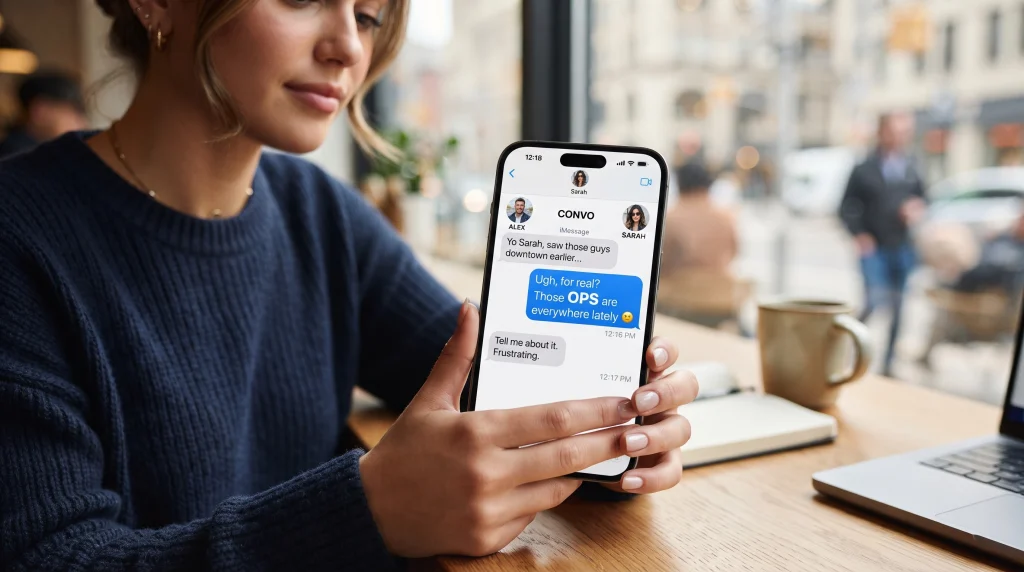
What Does Ops Mean in Text Messages?
In texting, ops generally means opponents, rivals, or people someone is against.
For example:
- “Don’t tell the ops.”
- “He’s hanging with the ops.”
- “We beat the ops.”
- “The ops know what happened.”
- “She used to be my friend, now she’s an opp.”
These messages can have different levels of seriousness. In a competitive game, “we beat the ops” could simply refer to the opposing team. Among friends, calling someone an “opp” can also be exaggerated or playful.
When the word appears without much context, look at the rest of the message before assuming it refers to actual enemies.
How Is Ops Used on Social Media?
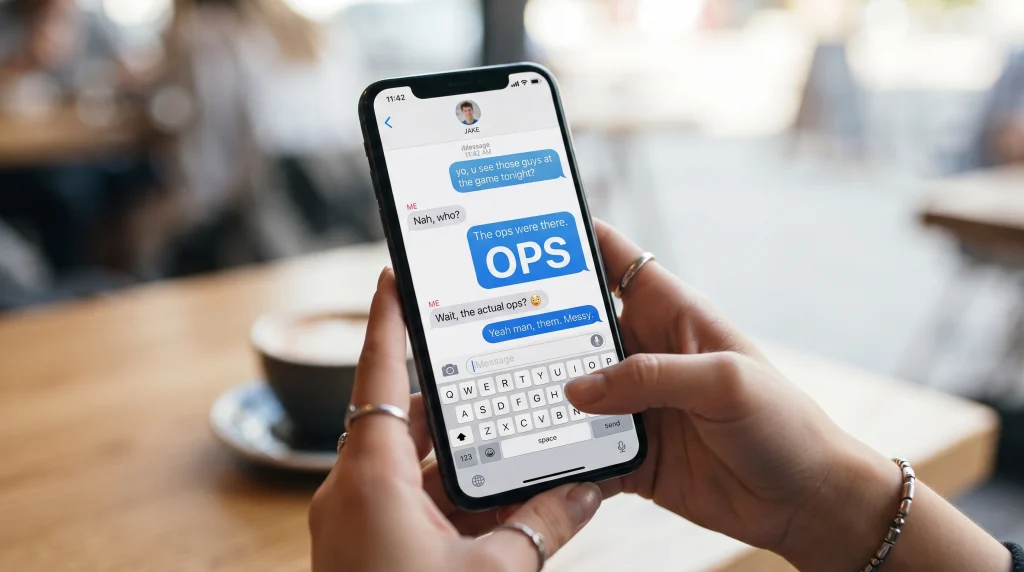
On platforms such as TikTok, Instagram, and other social spaces, “ops” can be used to describe rivals, haters, competitors, or anyone perceived as working against the speaker.
Social media has also helped broaden the word into humorous expressions. Someone might call a bad Wi-Fi connection, a rival sports team, or a difficult school assignment “the ops” simply for comedic effect.
For example:
“The Wi-Fi is officially the ops today.”
In this sentence, “ops” is not being used literally. It creates an exaggerated comparison between an everyday problem and an opponent.
Ops on TikTok and Instagram
On TikTok and Instagram, the term can appear in captions, comments, memes, and casual conversations. Its tone may range from serious to sarcastic.
A creator might write:
“The ops are watching.”
Depending on the video, this could be a dramatic joke, a reference to online rivals, or a more serious statement about people the creator considers opponents.
Because social media slang changes quickly, the same word can have a different tone in different communities. Reading the entire caption or comment thread is often more useful than interpreting “ops” by itself.

Ops in Gaming and Online Communities
Gaming is another environment where “ops” can be used casually. Players may refer to the opposing team or competing players as “the ops.”
For example:
“We need to beat the ops this round.”
In this context, “ops” usually means opponents rather than enemies in a real-world sense. The competitive setting makes the meaning relatively easy to understand.
The term can also appear in sports discussions, online debates, and friend-group conversations whenever people are talking about competition or rivalry.
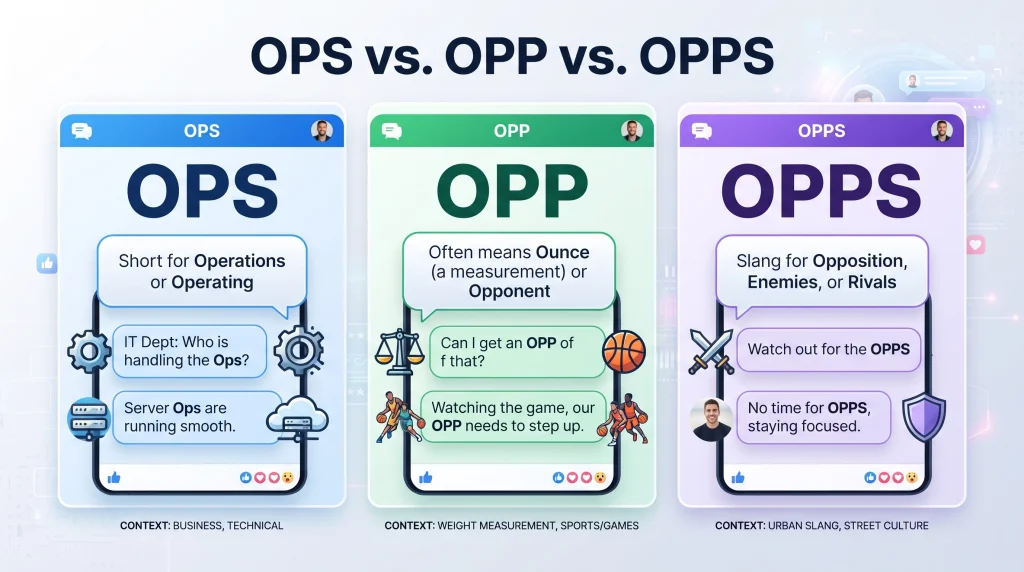
Ops vs. Opp vs. Opps
These terms are closely related, but their forms can vary depending on the community.
| Term | Common meaning | Typical use |
|---|---|---|
| Opp | An opponent, rival, or enemy | Singular |
| Opps | Multiple opponents or rivals | Plural |
| Ops | Opponents, opposition, or rivals | Informal plural/slang form |
| OP | Often “original poster” or “overpowered” | Forums, social media, gaming |
“Opp” is the clearest singular form when someone means one opponent. “Opps” is a common plural spelling, while “ops” is also used in informal online slang.
It is important not to confuse slang “ops” with OP, which has several unrelated meanings. In online discussions, OP often means “original poster,” while gamers commonly use OP to mean “overpowered.”
Can “Ops” Mean Something Else?
Yes. Context matters because “ops” can have meanings unrelated to slang.
Ops as “Operations”
In workplaces, “ops” is commonly short for operations. For example:
“Check with ops before the event starts.”
Here, “ops” has nothing to do with rivals. It refers to an operations team or operational work.
Ops as “Oops”
Some people type “ops” as a casual variation or typo of “oops,” particularly in quick messages. For example:
“Ops, I sent that to the wrong chat.”
In this situation, the intended meaning is an expression of surprise or acknowledgment of a small mistake. “Oops” is the standard spelling, while “ops” can be an informal variation.
OPS in Baseball
In American baseball, OPS is also a statistic meaning on-base plus slugging. It measures a hitter’s ability to reach base and hit for power.
Therefore, a baseball conversation about “OPS” is likely using the sports meaning rather than slang.
How to Tell Which Meaning of Ops Is Intended
The easiest way to understand “ops” is to examine the words around it.
If someone says:
“Stay away from the ops.”
They are probably talking about rivals or opponents.
If someone says:
“Ask ops to approve the schedule.”
They probably mean the operations team.
If someone says:
“Ops, wrong person!”
They probably mean “oops.”
And if someone says:
“His OPS is .850.”
They are almost certainly discussing baseball.
The platform and subject also provide clues. Slang conversations, memes, rap-related discussions, gaming chats, and casual texts are more likely to use “ops” for rivals. Workplace conversations and sports discussions may use the abbreviation in completely different ways.
Examples of Ops in Texting and Chat
Here are some examples showing how the slang can work in different situations:
Example 1: Rival
“He’s one of the ops.”
Meaning: He is considered a rival or opponent.
Example 2: Group
“The ops are outside.”
Meaning: The speaker is referring to multiple people they consider opponents. The seriousness depends on the surrounding context.
Example 3: Gaming
“We destroyed the ops.”
Meaning: The speaker’s team defeated the opposing players.
Example 4: Playful use
“My homework is the ops tonight.”
Meaning: The speaker is jokingly treating difficult homework as an opponent.
Example 5: Social media
“The ops are mad about the post.”
Meaning: People viewed as rivals or critics are unhappy about the post.
These examples show why “ops” should not always be interpreted literally. In modern online slang, the word can describe anything from an actual rival to a harmless competitive situation.
Is “Ops” Appropriate to Use?
“Ops” is informal slang, so it is generally better suited to casual conversations, social media, gaming, and conversations with people who understand the expression.
It may not be appropriate in professional emails, school assignments, formal documents, or situations where the meaning could be misunderstood. If you are writing for a professional audience, words such as opponents, rivals, competitors, or opposition are usually clearer.
It is also worth remembering that the word has roots in contexts where “opponent” could have a serious meaning. Using it casually online can be humorous, but the same expression may be interpreted differently depending on the people and community involved.
Final Thoughts
The most common ops meaning in slang is opponents, rivals, or people perceived as being against someone. It is related to “opp” and “opps” and has spread from hip-hop and street slang into broader online communication.
Still, “ops” is not limited to one definition. It can also refer to operations, appear as an informal form of “oops,” or refer to the baseball statistic OPS. The sentence, platform, and surrounding conversation usually make the intended meaning clear.
FAQ
What does “ops” mean in slang?
“Ops” usually means opponents, rivals, enemies, or people someone considers to be on the opposing side. It is commonly used in casual texts, social media, gaming, and online conversations.
What does “the ops” mean?
“The ops” generally refers to a group of rivals or opponents. In casual online use, it can also be a humorous way to describe competitors or anything someone is jokingly treating as an opponent.
Is “ops” the same as “opps”?
They are closely related. Both can refer to opponents or rivals, with “opp” commonly used for one person and “opps” or “ops” used informally for multiple people.
What does “opp” mean?
“Opp” is slang for an opponent, rival, enemy, or someone on the opposing side. The plural is commonly written as “opps.”
Does “ops” always mean enemies?
No. In slang, it often refers to rivals or opponents, but context can make the meaning playful rather than serious. Outside slang, “ops” can also mean operations, and “OPS” has a separate meaning in baseball.